


Great product very quick service package is good will definitely buy again in future
15% Off All Teas + Free Shipping Australia-Wide Over $70 | Use Code T3
Video Review: REAL REVIEWS, REAL RESULTS!
Watch 30-second video reviews from our happy customers.
May 16, 2026 5 min read
Most people never think about tea bags until they split open in a cup.
Or until they taste a proper pyramid tea bag for the first time and suddenly realize tea can taste completely different.
The reality is that there is an enormous difference between low-grade supermarket tea bags and premium pyramid tea bags.
At , a large amount of time goes into designing blends specifically for pyramid tea bags because not every tea, herb, flower, fruit, or spice behaves properly once enclosed inside a small mesh pyramid.
There is a misconception that tea bags are simply “loose leaf tea inside a bag.”
That is not really true.
Good pyramid tea bags require engineering, ingredient selection, testing, and balance.
In this article, we wanted to explain how premium pyramid tea bags are actually made, why they brew differently, and why we use plant-based Soilon mesh rather than conventional tea bag materials.
For decades, much of the tea industry relied on low-cost flat paper tea bags filled with extremely small tea particles often referred to as “dust” or “fannings.”
These tiny particles brew quickly, which is useful for mass production and convenience.
But they also create several problems:
• bitterness
• muddy flavor
• poor aroma
• lower visual appeal
• reduced complexity
Traditional flat tea bags also restrict movement inside the bag.
Tea leaves need room to expand during brewing.
Without space, the infusion becomes limited.
This is why many supermarket teas taste one-dimensional compared to premium loose leaf tea.
Pyramid tea bags changed the industry because they created space.
The pyramid shape allows:
• larger tea leaves
• flowers
• herbs
• fruit pieces
• spices
…to move and expand more naturally during brewing.
This improves extraction and allows more complex flavor development.
From a visual perspective, pyramid tea bags also create a more premium customer experience.
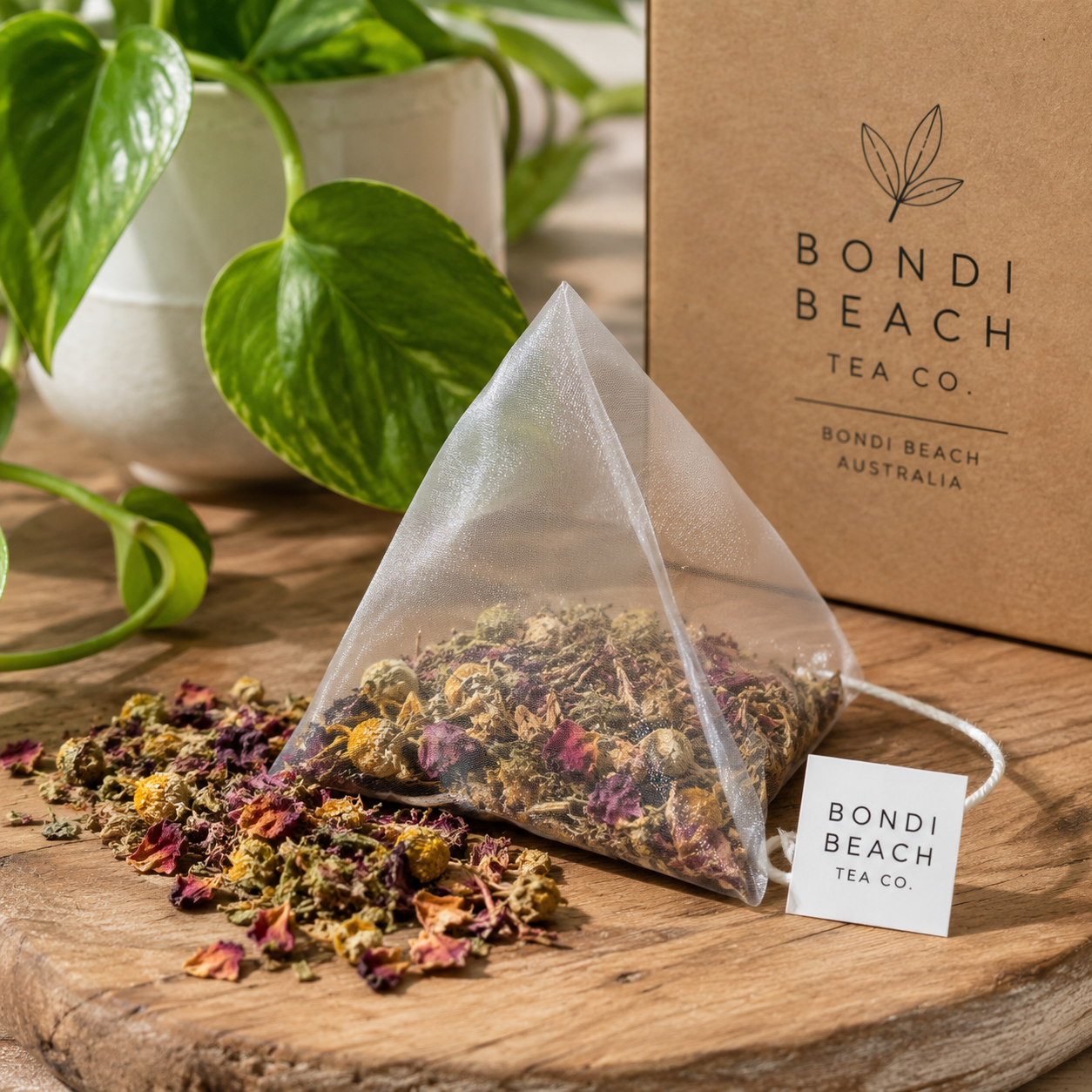
Customers can actually see the ingredients.
That transparency matters.
When someone sees real chamomile flowers, peppermint leaves, rose petals, or green tea leaves inside a clear pyramid tea bag, the product immediately feels more authentic.
One of the most common questions we receive is:
“What are your pyramid tea bags made from?”
We use Soilon mesh for many of our pyramid tea bags.
Soilon is a plant-based mesh material made using PLA (polylactic acid), which is derived from renewable plant resources such as cornstarch.
It was developed as an alternative to conventional petroleum-based nylon tea bag materials.
This matters because consumers have become increasingly conscious about sustainability and plastics in food products.
Many people are surprised to learn that some traditional silky tea bags on the market are made from petroleum-derived materials.
Soilon offers a more plant-based alternative while still allowing the transparency and brewing performance that premium pyramid tea bags require.
There are several reasons.
Larger ingredients need room to hydrate and expand.
A cramped flat tea bag can limit water flow.
Pyramid tea bags allow better circulation around the ingredients.
Whole or larger-cut ingredients generally produce cleaner flavor profiles.
Dust-grade tea particles often brew aggressively and become bitter quickly.
Customers increasingly want to see what they are drinking.
Clear pyramid tea bags showcase ingredients properly.
One of the biggest differences between premium pyramid tea bags and conventional tea bags is aroma release.
When larger ingredients hydrate properly, the aroma becomes far more noticeable.
This is where things become interesting.
Many ingredients that work beautifully in loose leaf tea do not work well in tea bags.
At Bondi Beach Tea Co., we often reformulate blends specifically for tea bag production.
A few common issues include:
Powders can create dust, clogging, sealing issues, and inconsistent brewing.
Some dried fruits or sweet ingredients become tacky over time and interfere with production.
Oversized ingredients may physically prevent proper sealing.
Heavy roots or bark pieces may settle unevenly during filling.
A tea blend must not only taste good. It must also function mechanically during manufacturing.
That is something consumers rarely see behind the scenes.
Ingredient cut size dramatically affects brewing.
Smaller cuts generally brew faster.
Larger cuts usually brew more slowly but may provide cleaner flavor.
The challenge is balancing visual appeal with practical brewing performance.
For example:
• overly fine peppermint may overpower a blend quickly
• oversized ginger pieces may under-extract
• delicate flowers can break during production
Good tea blending requires understanding how ingredients behave both dry and during infusion.
Tea is highly aromatic.
That means packaging quality matters enormously.
Once tea is exposed to oxygen, light, humidity, and heat, quality begins to decline.
This is why premium tea companies invest heavily in barrier pouches and proper storage.
Freshness affects:
• aroma
• flavor
• color
• customer experience
A stale herbal tea may still technically be drinkable, but it loses vibrancy.
Good tea should smell alive when opened.
This usually comes down to ingredient quality.
Low-cost tea bags often use:
• lower-grade tea particles
• broken leaves
• excessive dust
• artificial flavoring
Premium tea bags generally contain larger and more recognizable ingredients.
There is also usually less need to “force” flavor through artificial means when the base ingredients are high quality.
Consumers today ask more questions than ever before.
People want to know:
• where ingredients come from
• whether teas are organic
• whether tea bags contain plastic
• how products are packed
• how ingredients are sourced
This shift is pushing the tea industry toward greater transparency.
Brands can no longer simply rely on marketing language.
Consumers increasingly expect real answers.
Even excellent tea can taste disappointing if brewed incorrectly.
One of the most common mistakes people make is using boiling water on delicate green teas.
This can scorch the leaves and create bitterness.
Different ingredients require different brewing approaches.
That is why proper brewing instructions are important, especially for premium tea products.
One concern we have about modern e-commerce is that many products now feel over-manufactured and disconnected from the people behind them.
Tea should not feel like that.
Tea is still something deeply sensory and personal.
It is tied to routines, conversations, mornings, evenings, stress relief, hospitality, and comfort.
That is why we still believe good tea brands should feel human.
Customers can usually tell when products are made thoughtfully versus mass-produced purely for margin.
Pyramid tea bags may look simple from the outside, but a surprising amount of work goes into producing them properly.
The ingredients must:
• taste balanced
• brew correctly
• fit properly
• seal properly
• remain visually appealing
• stay fresh
• and deliver a consistent customer experience
The tea industry has changed dramatically over the years, but one thing remains true:
People can still taste quality.
And when tea is made carefully using good ingredients, proper blending techniques, and high-quality materials like Soilon pyramid mesh, the difference in the cup becomes obvious very quickly.
Comments will be approved before showing up.
June 16, 2025 3 min read
Read MoreSign up to get the latest on sales, new releases and more …
Great product very quick service package is good will definitely buy again in future
A great tasting tea that does what it says